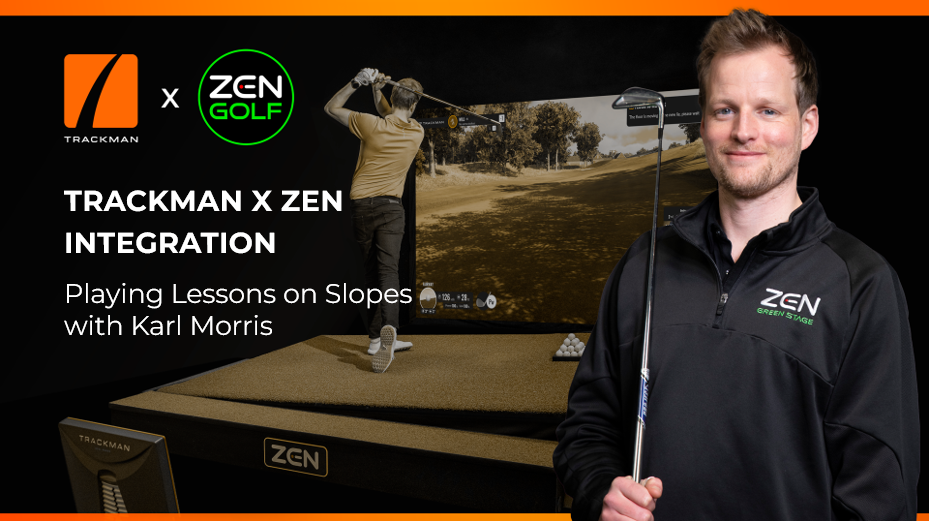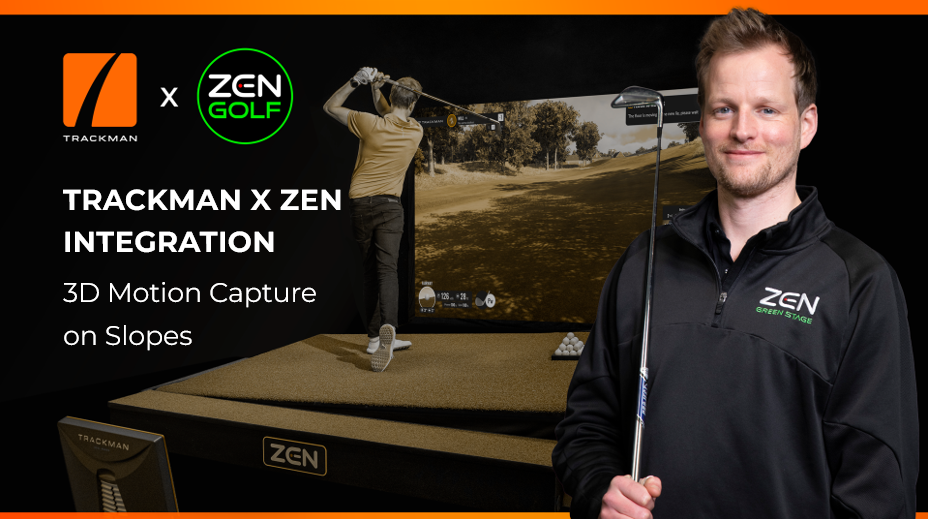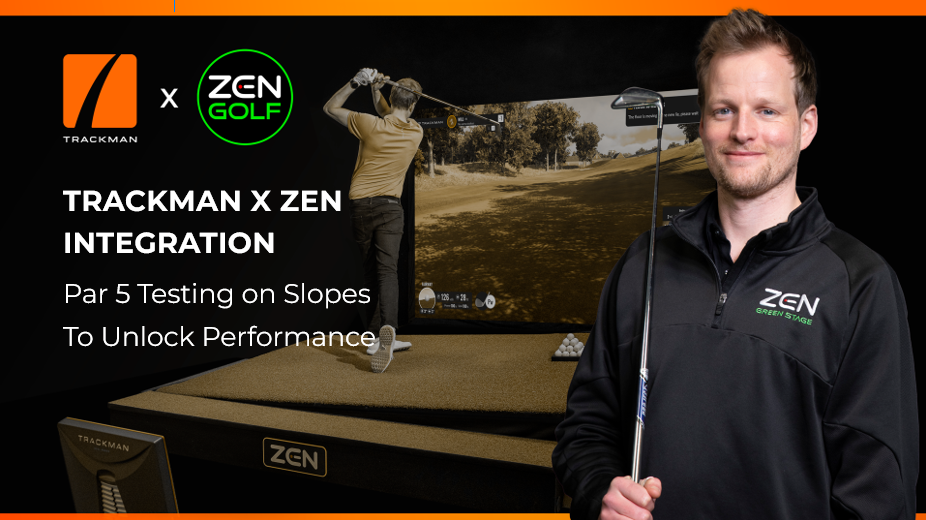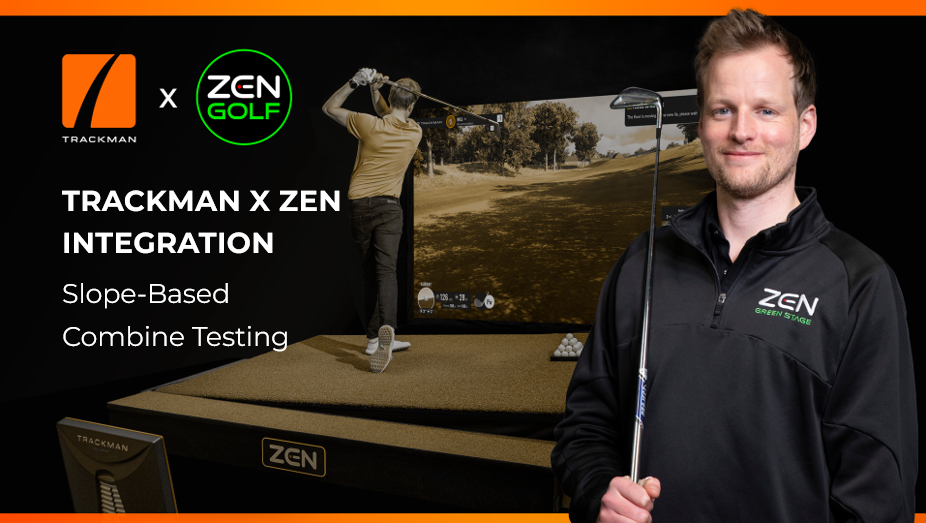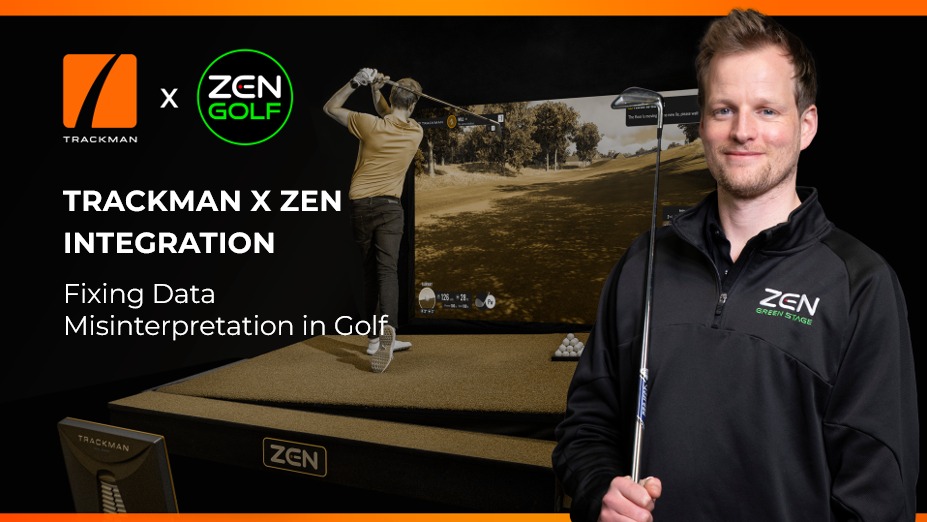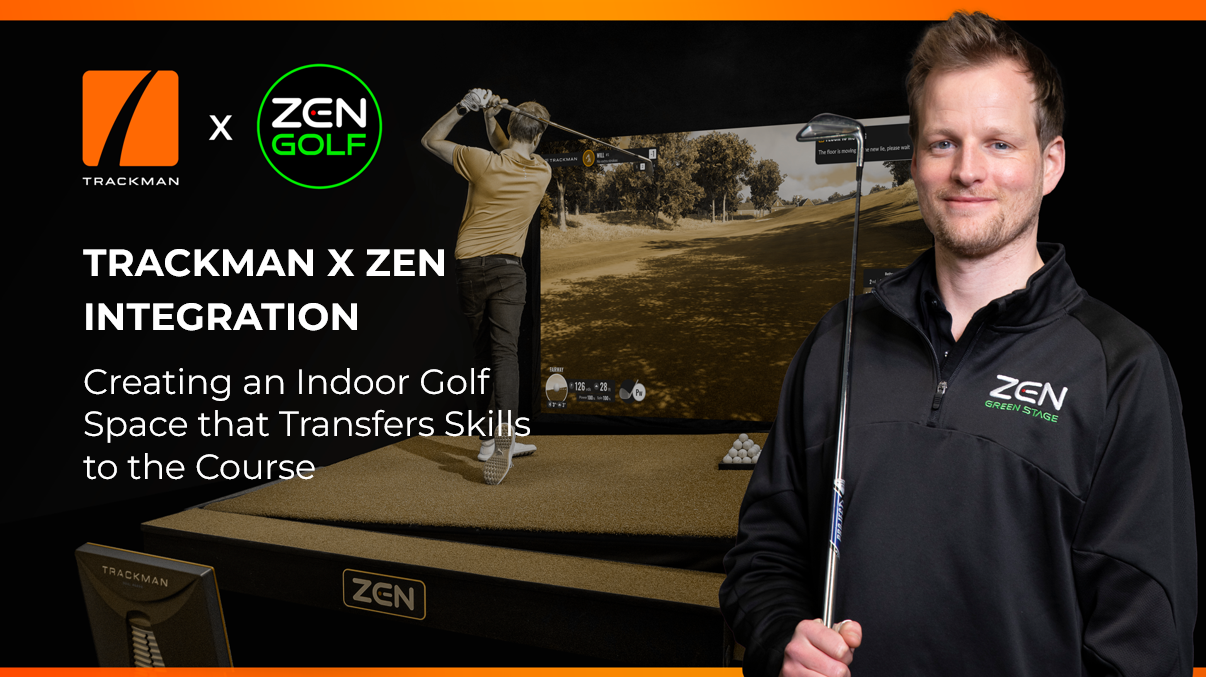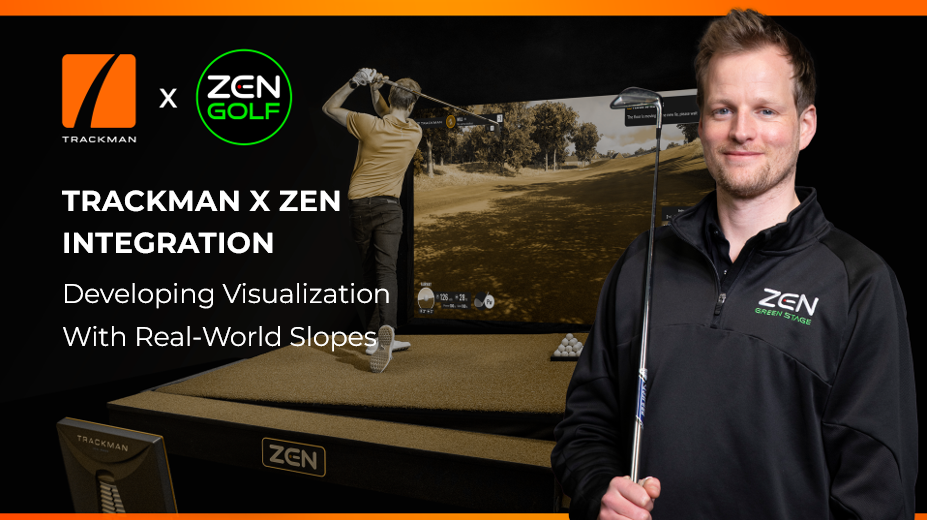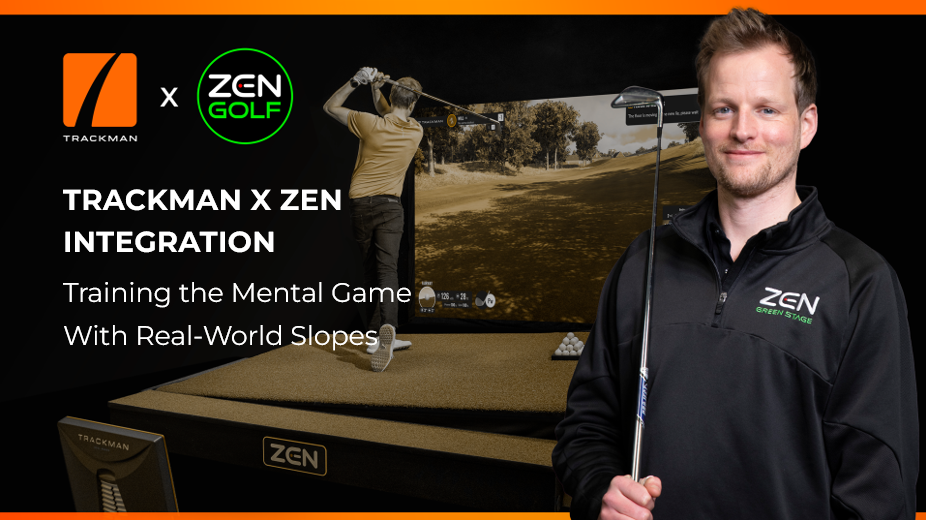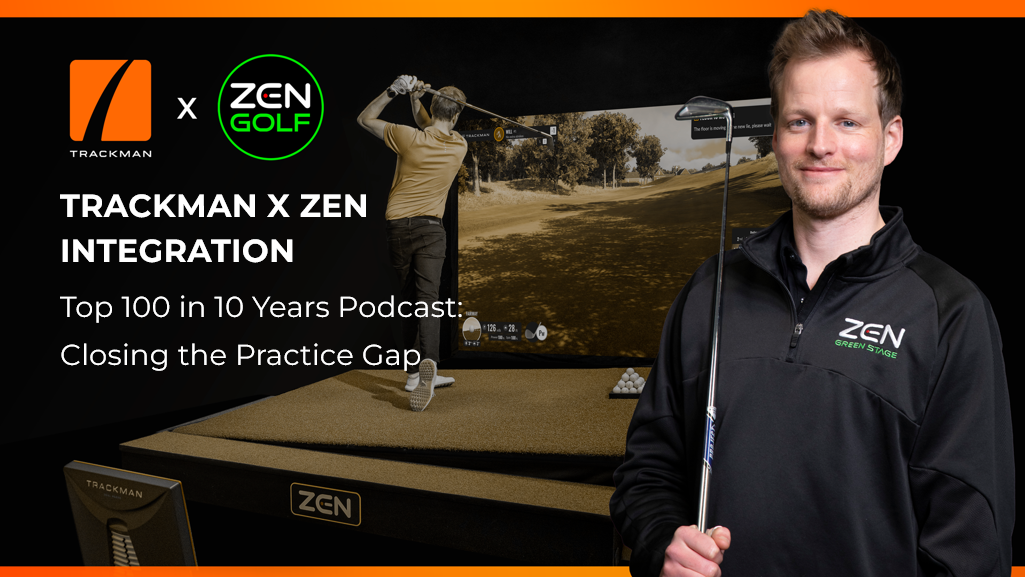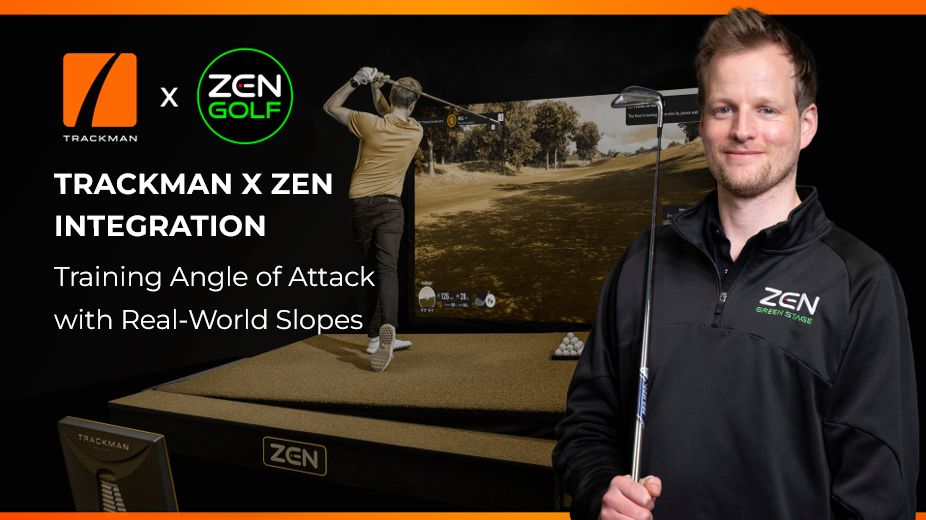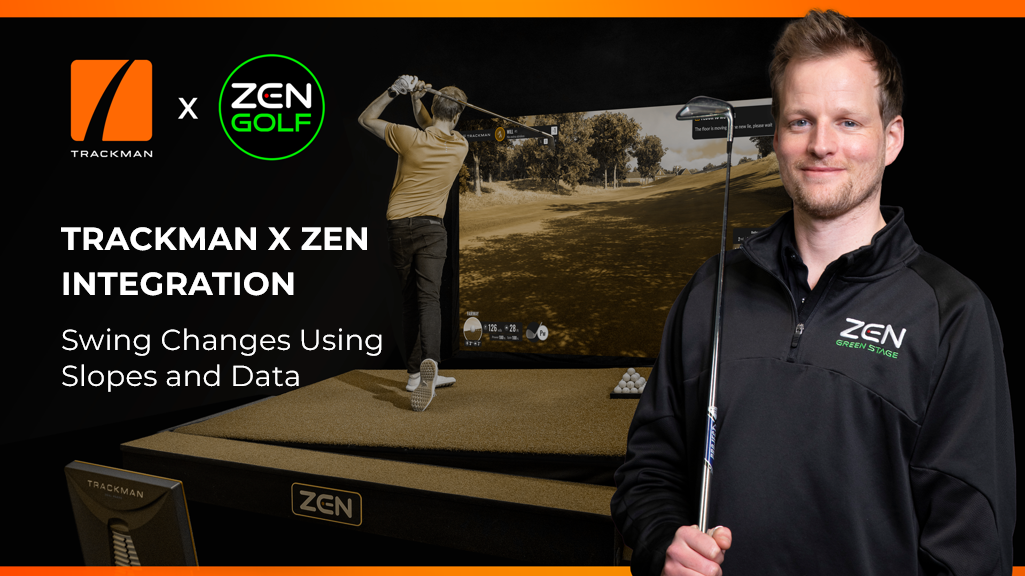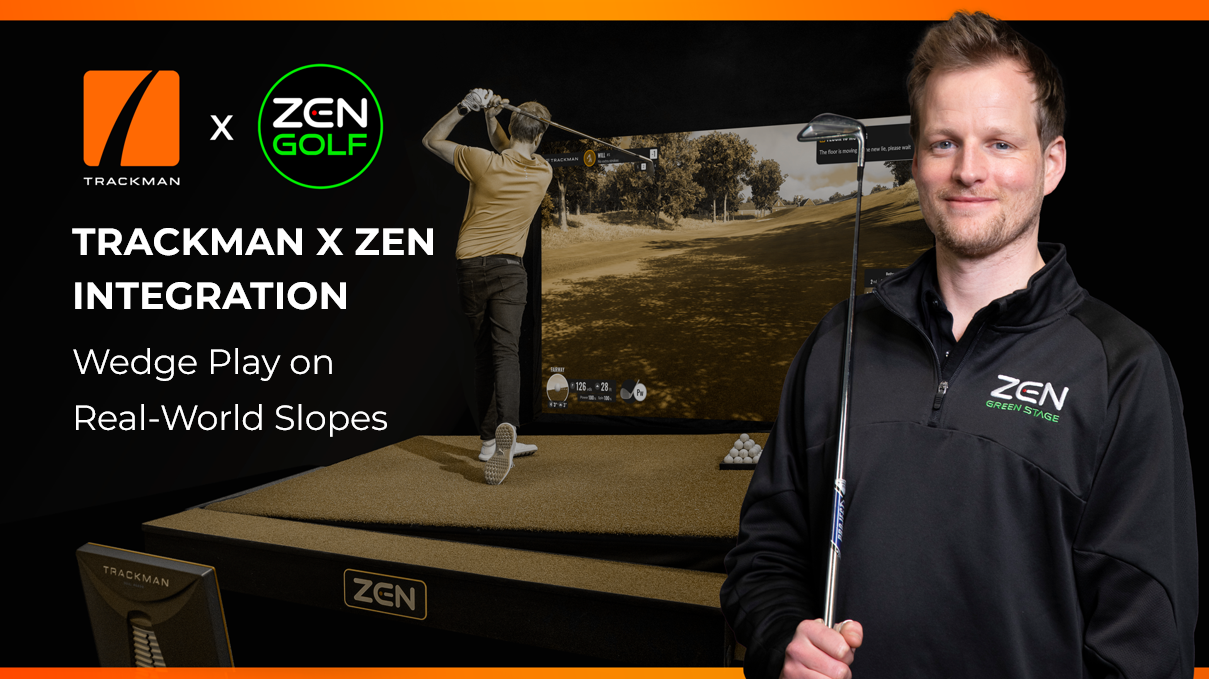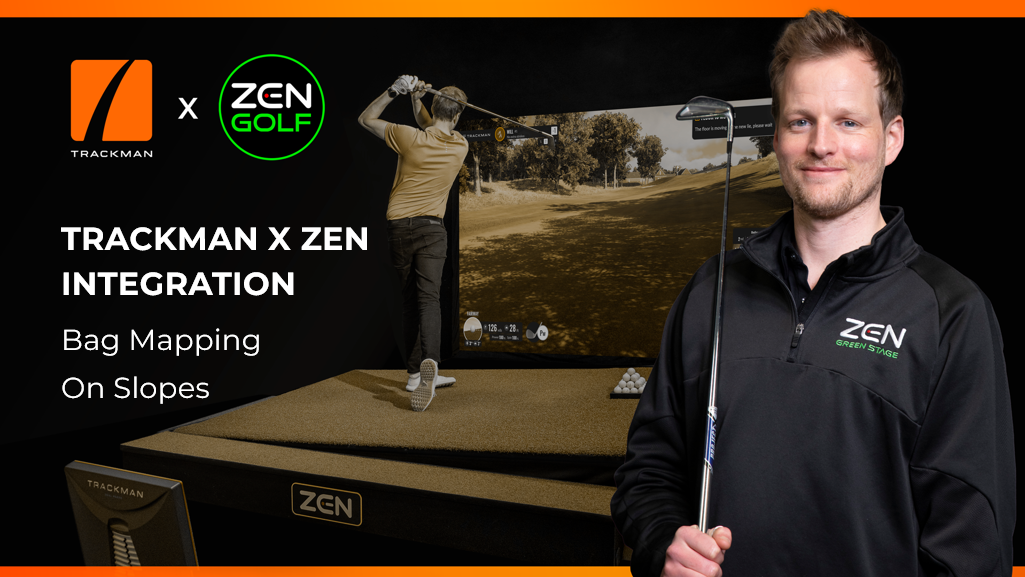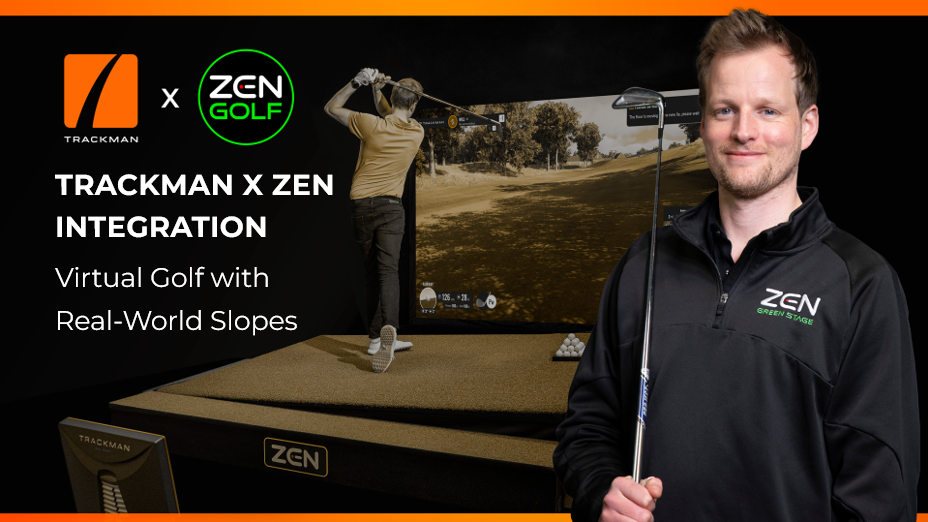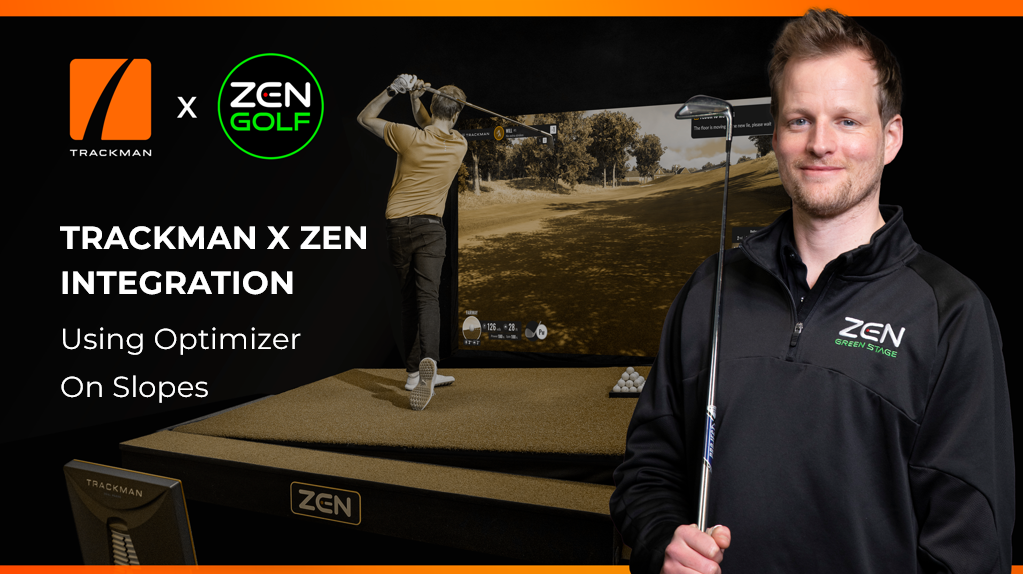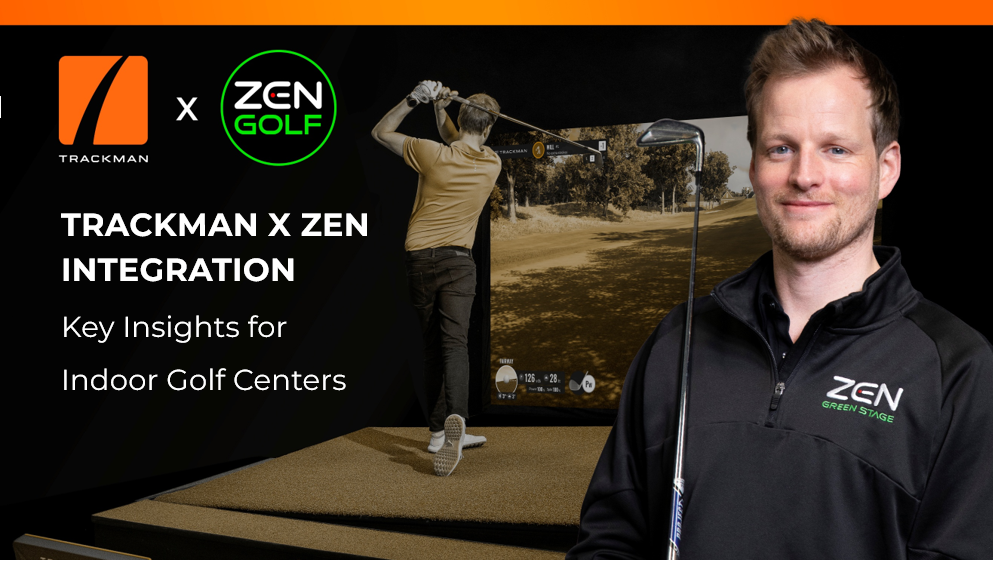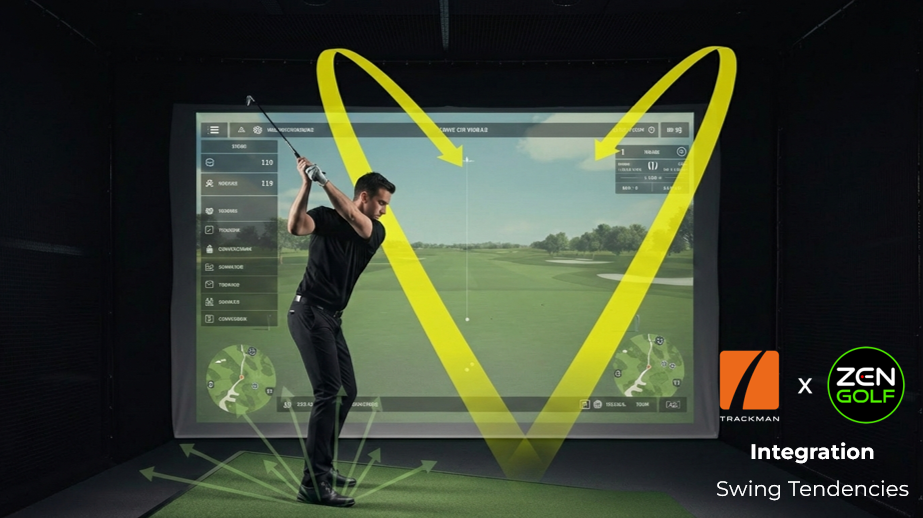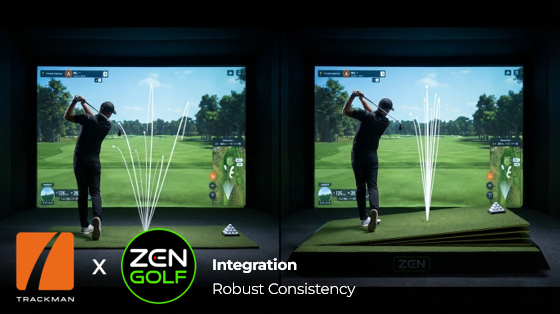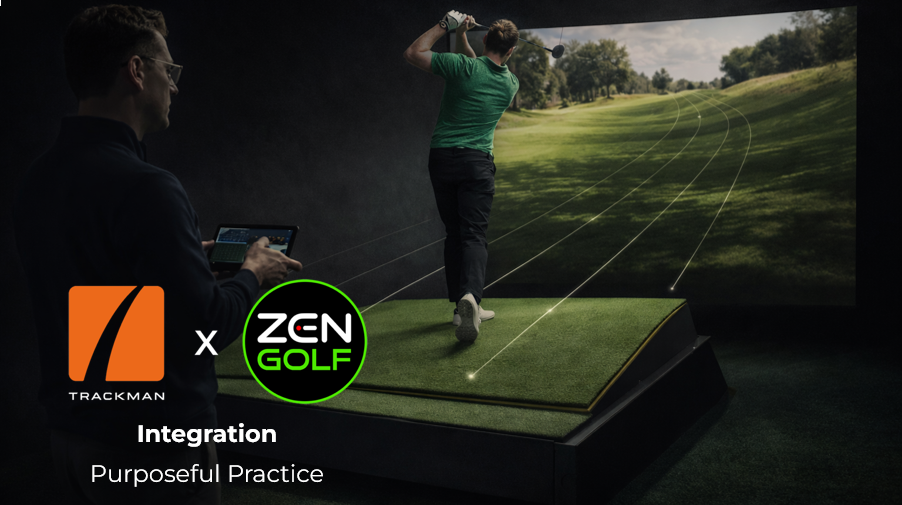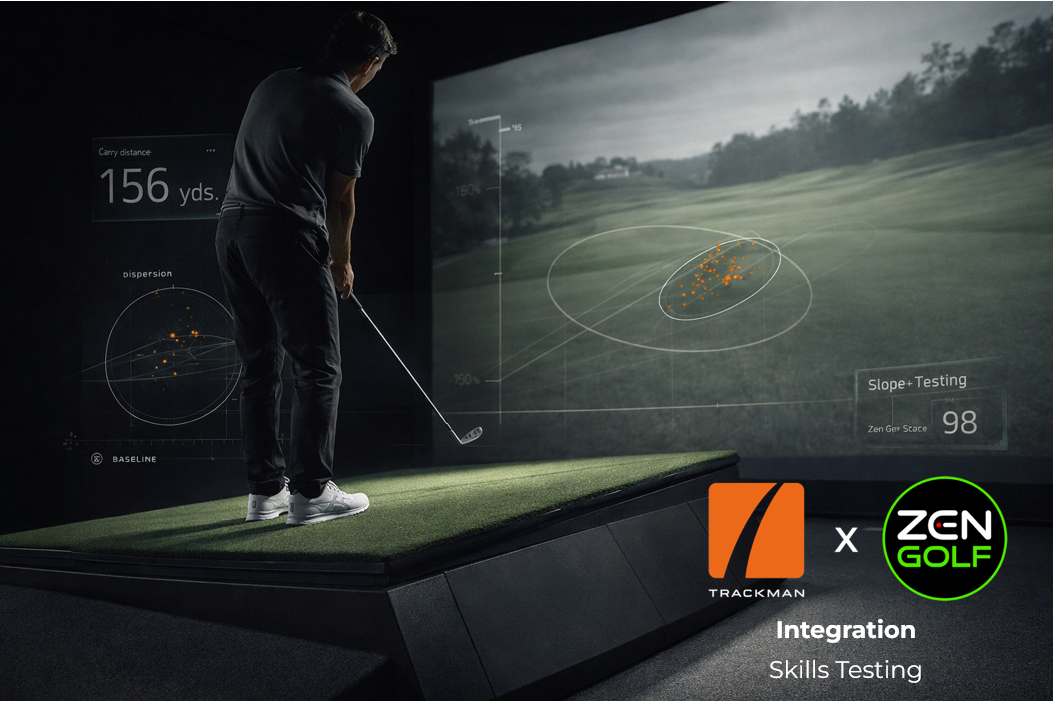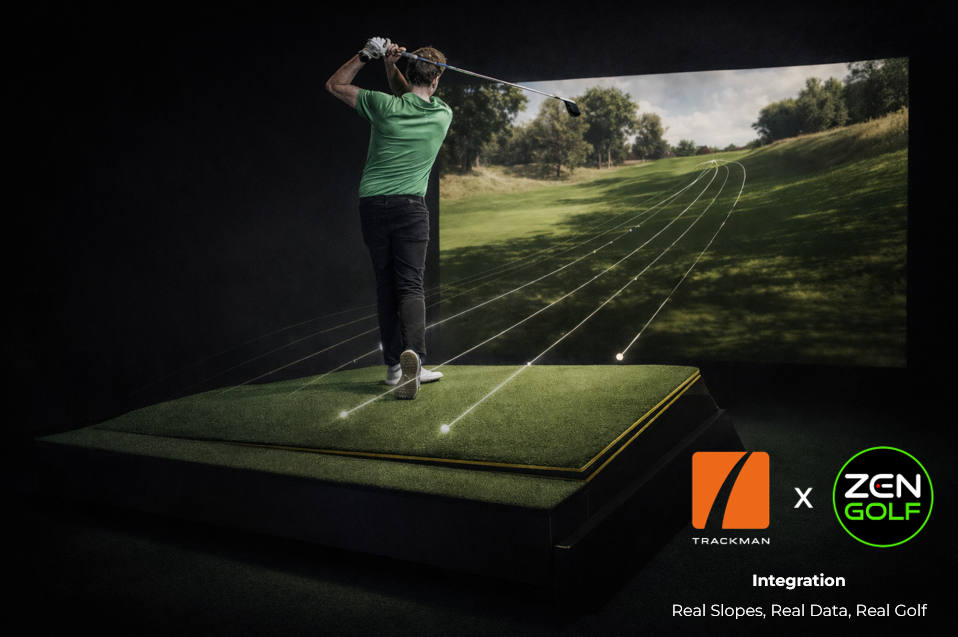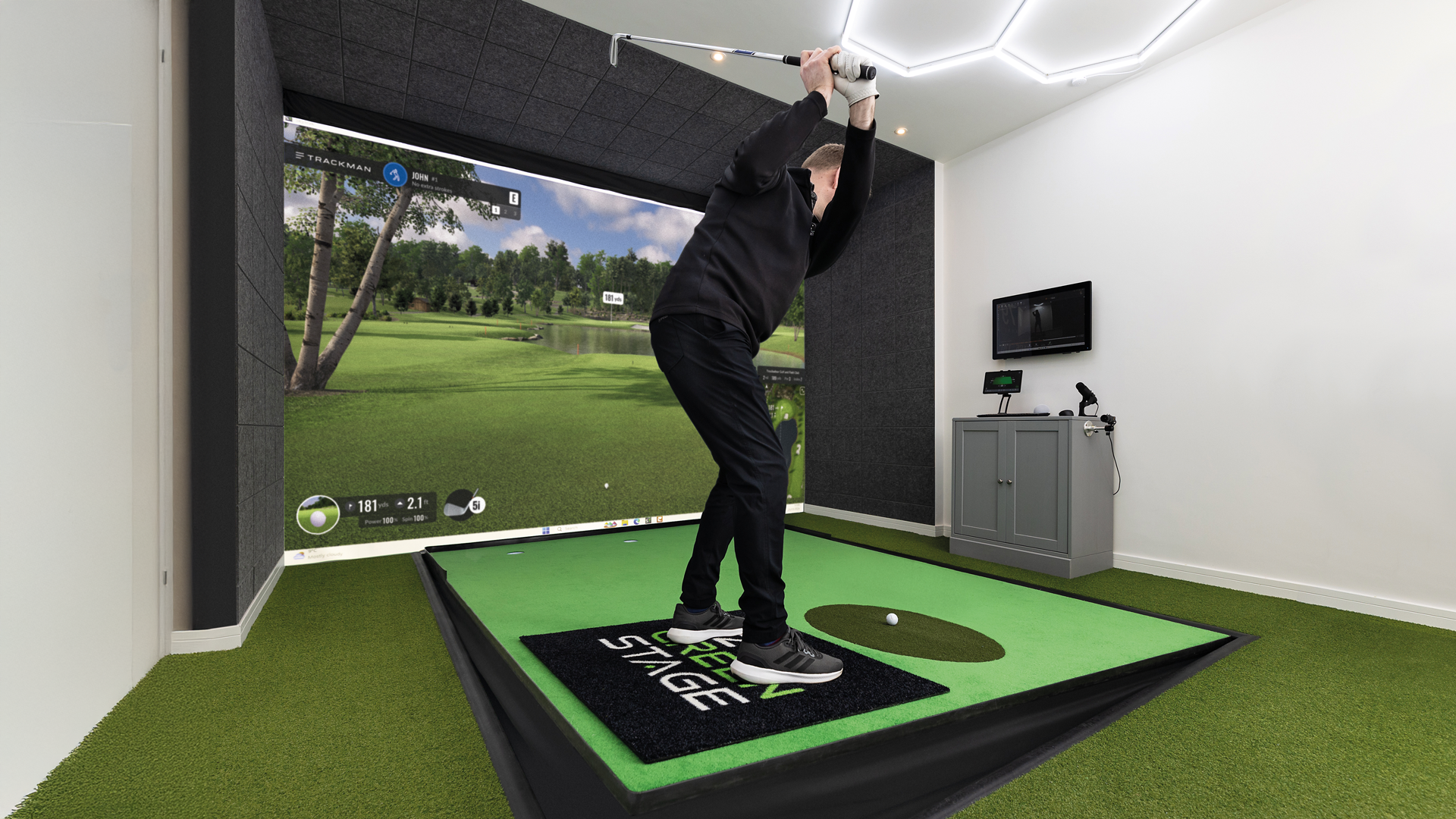
The Trackman x Zen Golf Integration Explained

Overview

The Trackman × Zen integration connects Trackman simulator course data with Zen Golf’s active slope platforms, allowing the physical ground beneath the player to match the lie shown in Trackman before each shot.

It brings real uphill, downhill, sidehill, diagonal, and compound lies into an indoor Trackman environment, while Trackman captures club delivery, ball flight, launch, spin, carry, and shot outcome.

For coaches, facilities, universities, club fitters, and private Trackman owners, the integration adds physical context to simulator practice. The player sees the shot on screen, feels the slope underfoot, and receives performance data from the same playing condition.

Zen Swing Stage supports full-swing Trackman integration for simulator golf, wedge play, uneven-lie testing, and slope-based coaching.

Zen Golf Stage supports full-swing integration where buyers want one slope-controlled surface for putting, short game, wedge play, and full swing.

Zen Green Stage remains the putting-first platform, with Trackman putting integration expected subsequently.

Note: Some videos show Zen Swing Stage 1, the force-plate model. Zen Swing Stage 2, introduced for 2026, is designed for non-force-plate simulator customers and offers twice the movement speed of Zen Swing Stage 1 and Zen Golf Stage.

For buyers comparing room requirements, product options, installation routes, and use cases, access the Trackman × Zen Buyer’s Guide before planning your installation.


Written by: Will Stubbs, Head of Education, Zen Golf

Last Updated: 06/05/2026
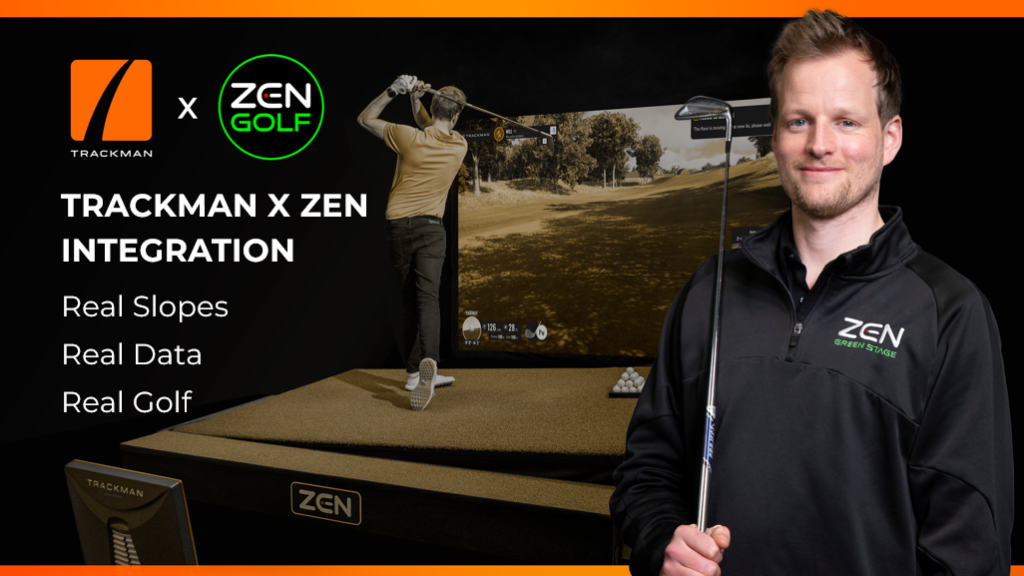
What Is the Trackman x Zen Golf  Integration?

How the Integration Works

  1. Trackman determines the ball’s lie and slope using simulator course data
  2. That terrain information is sent to Zen’s active slope platform
  3. The Zen platform automatically tilts to recreate the same lie as Virtual Golf
  4. The player hits the shot while Trackman records performance metrics

The visual simulation, physical environment, and performance data are all synchronized to the same shot.


Why this Matters for Indoor Golf

The integration allows Trackman data to be interpreted within real environmental constraints, rather than on flat indoor mats.

For golf, this means:

  • Performance data reflects functional adaptation, not just technique in a flat bay
  • Movement patterns can be evaluated under real balance and ground-interaction demands
  • Indoor practice transfers more effectively to on-course performance


What is the Integration?

  • A physical environment that matches Trackman Virtual Golf 3 simulated lies
  • A way to contextualize Trackman data using real slopes
  • A tool for representative, transfer-focused practice for better score on the course


Who is the Integration for?

For Coaches

Teach shot-making, strike, balance, low point, club selection, and adaptability from real slopes.

Explore coach use cases

For Indoor Golf Centers

Create a premium bay experience that separates your facility from standard flat simulator environments.

Explore indoor center use cases


For Universities and Academies

Build a more representative training environment for player development, testing, and team practice.

Explore university and academy use cases


For Club Fitters

Test whether club performance holds up when the player is no longer standing on flat ground.

Explore club fitting use cases

For Home Studios

Bring more course-like practice into a personal Trackman setup.

Explore player use cases


Why it matters commercially

Indoor golf is becoming more competitive. Many facilities can offer accurate launch monitor data, premium screens, and simulator course play.

Zen gives a Trackman bay a physical difference.

The lie changes. The player feels it. The session becomes more memorable. Coaches can build more valuable programs. Facilities can create premium experiences, slope challenges, leagues, playing lessons, fitting sessions, and repeatable practice products.

This changes the bay from a simulator to a performance environment.

Zen can help facilities create:

  • Premium Trackman bays
  • Slope-based leagues and competitions
  • Playing lessons indoors
  • Coach-led skills testing like Combine on slopes
  • Bag-mapping on slopes for accurate distance control
  • Club fitting from real-world lies
  • University player development sessions
  • Member challenges and return-visit experiences
  • Higher-value simulator packages


Summary

The Zen Golf × Trackman integration transforms indoor golf from a flat, idealized setting into a physically representative practice environment, allowing coaches and players to evaluate performance data in the same conditions in which golf is actually played.


Planning a Trackman × Zen Room?

Compare Zen Swing Stage, Zen Golf Stage, and Zen Green Stage options before finalizing your simulator design.

Watch the Trackman x Zen Integration in Action

For Coaches

For Indoor Golf Centers

Trackman x Zen Integration Articles
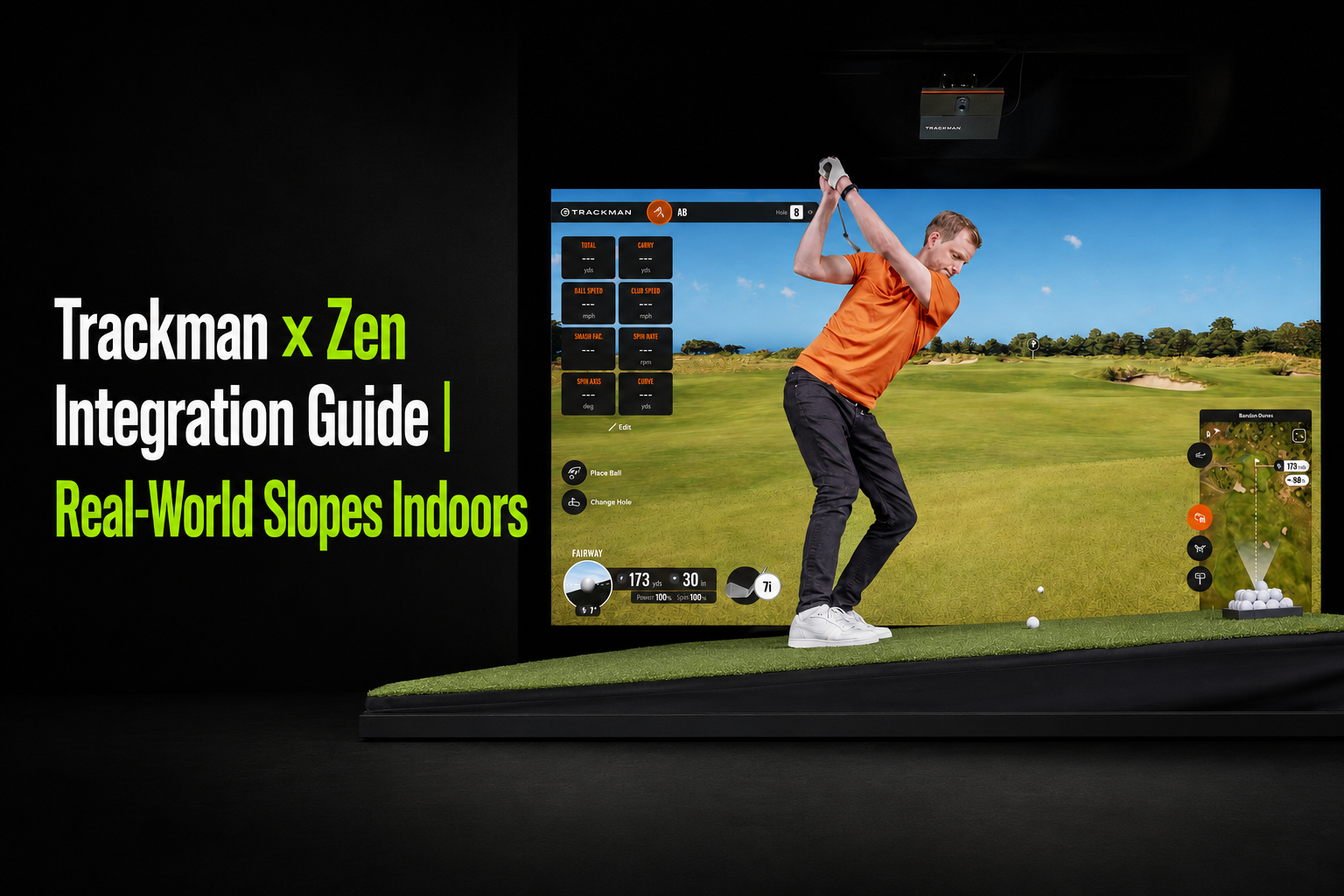
Room, installation, and planning requirements

What do we need to know before advising you?

To confirm room, pricing, and installation requirements, Zen needs:

  • Room dimensions
  • Ceiling height
  • Country and location
  • Trackman model
  • Current or planned simulator layout
  • New build or retrofit
  • On-floor or in-floor preference
  • Intended use: coaching, commercial, university, fitting, private studio, or indoor golf center
  • Desired timeline

Share your room dimensions and project goals. We’ll advise on product fit, installation route, Trackman integration, likely project requirements, and next steps.

FAQ

The Trackman × Zen Golf integration connects Trackman simulator course data with Zen Golf’s active slope platforms, allowing the physical ground beneath the player to automatically match the lie shown in Trackman before each shot.

Instead of standing on a flat mat while the simulator shows uphill, downhill, sidehill, or compound lies, the player physically feels the real-world slopes underfoot with the Zen Swing Stage or Zen Golf Stage. Trackman then captures the ball flight, club delivery, launch, spin, curvature, carry, and dispersion data from that real slope condition.

The result is a more representative indoor golf experience where the screen, the ground, and the performance data all describe the same shot.

The integration works by synchronizing the simulated lie with the physical playing surface.

Trackman identifies the lie and slope from the simulator environment. That terrain information is sent to the Zen platform. The Zen Swing Stage and Zen Golf Stage automatically moves to recreate the uphill, downhill, sidehill, or compound lie. The player hits the shot while Trackman records the outcome.

This means the player is no longer reacting to screen information alone. They are standing inside the problem the course presents.

The integration currently supports the Trackman iO for automatic movement with Zen’s moving floors.

Trackman 4 integrates but is not formally supported by Trackman.

The correct setup depends on your Trackman model, software configuration, simulator design, and room specification. Zen can confirm compatibility during the enquiry and room-planning stage.

The integration currently supports the Trackman iO for automatic movement with Zen’s moving floors.

The correct setup depends on your Trackman model, software configuration, simulator design, and room specification. Zen can confirm compatibility during the enquiry and room-planning stage.

The Trackman × Zen integration is designed around Trackman Virtual Golf 3 and supports automatic movement across Virtual Golf 3 environments, including on-course play, on-course practice, and target practice game modes.

This allows a coach, player, or facility to move between competitive simulator play, repeated on-course scenarios, and structured training while keeping the same physical slope context underfoot.

No. Trackman automatically turns off the slope software adjustments for slopes, so it tracks the real data from the shot.

For the first time indoors, Trackman captures performance while the player is standing on a realistic lie. That gives the numbers more context because the player’s balance, low-point control, launch, spin, start direction, strike, and decision-making are being shaped by the ground.

Slope changes how golf is played.

An uphill lie can change launch, dynamic loft, strike, and club selection. A downhill lie can alter low point, trajectory, and contact. A sidehill lie can influence balance, face-to-path, start direction, and shot shape. Compound slopes create even richer movement and decision-making demands.

On a flat simulator mat, those constraints are removed. With Zen integrated into Trackman, golfers can train and play in conditions that more closely resemble the course.

A standard simulator bay gives the player visuals, ball flight, distance, launch data, and shot feedback while the golfer usually stands on flat ground.

The Trackman × Zen integration adds the missing physical condition: the lie.

That changes the experience from screen-based simulation to full-body simulation. The golfer does not just see the slope. They feel it, adapt to it, and learn from it.

The player feels the ground move into the slope shown in the simulator.

They may feel the ball above or below their feet, an uphill stance, a downhill stance, a diagonal lie, or a compound slope. That changes balance, posture, pressure, confidence, shot selection, and commitment.

This is the key difference. The player is not imagining how a slope might affect the shot. They are experiencing it before they swing, just like they do on the course.

No. The integration is useful for all use cases, including elite,  developing players, serious amateurs, juniors, universities, coaches, fitters, and indoor golf facilities.

Elite players can stress-test shot patterns under realistic conditions. Coaches can design better learning environments. Developing players can learn earlier how the ground affects strike, launch, and shot shape. Facility owners can create an indoor golf experience that feels different from a standard flat bay.

The gradient can be scaled depending on the player, session aim, and challenge level.

It is for coaches, academies, universities, indoor golf centers, private golf studios, custom fitters, golf clubs, resorts, and serious golfers who want indoor practice to behave more like real golf.

It is especially valuable for anyone already using Trackman and looking to make their simulator bay more representative, more commercially distinctive, and more useful for performance development.

Coaches gain a more informative environment.

Instead of only asking whether a number is good or bad, the coach can ask why a solution worked on one lie and failed on another. Trackman data becomes a way to understand behavior under real-world slopes, rather than simply validate technique on flat ground.

This helps coaches design sessions around adaptability, shot selection, balance, strike, intent, and transfer to the course.

Facility owners gain a more differentiated indoor golf experience.

Many facilities now offer accurate launch monitor data, simulator graphics, and large course libraries. Accuracy alone is becoming harder to differentiate. Zen adds a physical experience that players remember, talk about, and return for.

For commercial venues, this can support premium bay pricing, coaching programs, membership engagement, fitting services, corporate events, leagues, and player development packages.

It matters because indoor golf is no longer only competing on screens, data, and simulator accuracy.

Zen gives a facility a physical point of difference. The same bay can create new problems, new stories, new coaching conversations, and new reasons to return. A player can come back to test themselves against slopes, repeat course scenarios, replay difficult lies, run challenges, join leagues, or prepare for real rounds.

That makes the bay more than a simulator. It becomes a performance, experience and rentention driver.

Yes.

For coaching, it helps players learn how their swing and decision-making adapt to slope.

For fitting, it can reveal whether club delivery, launch, strike, and shot shape hold up from different lies.

For entertainment, it makes simulator golf more immersive because the player feels the terrain shown on screen.

This makes the same installation valuable across lessons, custom fitting, practice memberships, simulator play, leagues, events, and private use.

Yes. Real-world club fitting should consider how clubs perform when the lie is not flat.

A club that performs well from a perfect mat may behave differently when the player is on an uphill, downhill, or sidehill lie.

With Trackman measuring the data and Zen creating the slope, fitters can explore how launch, spin, strike, height, descent, curvature, and dispersion behave under more realistic playing conditions.

Take a deeper dive into club fitting with the integration in our article Trackman x Zen: Custom Fitting on Real-World Slopes.

Your total room requirement is 14ft wide x 18ft deep x 11ft high, or approximately 4.2m wide x 5.5m deep x 3.2m high.  

The Zen Swing Stage itself is 6 ft by 8 ft, or approximately 1.8 m by 2.4 m.

The Zen Golf Stage comes in two sizes, with the 12 ft x 8 ft version optimal for an immersive ball-to-screen sim experience.

The room space allows for the Stage footprint, safe full-swing clearance, impact screen or netting, Trackman setup space, projector or display requirements, access around the hitting area, and enough room for the player to swing comfortably with driver.

For a personalized design answer, Zen will review your room dimensions, ceiling height, hitting direction, simulator layout, Trackman model, screen position, flooring plan, and whether the stage will be installed on-floor or in-floor.

The key requirements are:

A suitable simulator or coaching space with safe swing clearance – approximately is 14ft wide x 18ft deep x 11ft high, or approximately 4.2m wide x 5.5m deep x 3.2m high.  

This room layout that accommodates the 6 ft by 8 ft Zen Swing Stage, or 12 ft by 8 ft Zen Golf Stage footprints.

A decision on whether the product will be installed on-floor with surrounds and steps, or recessed in-floor for a flush finish.

A compatible Trackman setup, with high-spec PC and software configuration TPS10.3.

Suitable access for delivery and installation.

Coordination between Zen, the simulator designer, the Trackman setup, and any construction or flooring team involved.

The best route is to review the room early, before finalizing flooring, screen position, projector location, and bay dimensions.

The Zen Stage requires:

  • 1 domestic grounded Type B power outlet: NEMA 5-15, located near the Zen control box
  • 1 CAT6 Ethernet outlet: located near the Zen control box
  • Total power consumption: ≤ 6 amps at 120V

These connections should be planned into the simulator room design before installation to ensure the Swing Stage can be powered, connected, and commissioned correctly.

Both options are available for the original Zen Swing Stage and Zen Golf Stage. It can be installed on-floor with surrounds and steps, or recessed into the floor for a flush finish.

Zen Swing Stage 2.0 is as an in-floor focussed product to maximize immersion. An on-floor surround can be utilized, but it is advised to raise the floor between the Stage and the sim screen for improved experience and safety.

This makes early room planning especially important if you are designing a new simulator bay or upgrading an existing one.

Yes, this is often the preferred approach for new builds or major simulator upgrades.

Installing the Zen Stage and Trackman simulator together allows the room layout, screen position, hitting position, flooring, projector, safety space, access, and software integration to be planned as one system.

For retrofit projects, Zen can assess the existing bay and advise what changes may be needed.

A typical Zen Swing Stage installation takes approximately 1 to 2 days, and Zen Golf Stage 2 days, depending on floor preparation, room access, installation type, accessories, and whether additional simulator work is being completed at the same time.

In-floor installations may require preparation before the Zen installation team arrives. New builds should allow time for planning, drawings, flooring coordination, and room sign-off before installation.

Zen products are installed by Zen’s own installation team or trained installation partners, which include Trackman’s team of installers.

Zen has also been training installation teams globally to support Trackman-ready indoor facilities. For commercial projects, Zen can work with your studio designer, builder, simulator provider, or Trackman contact to coordinate the installation pathway.

Zen has an installer certification portal for teams looking to become trained on installing the products.

6 week production lead time depending on manufacturing schedule, with additional time allocated for shipping route, installation team availability, and whether the project is a new build or retrofit.

The most accurate lead time is confirmed after Zen reviews your room, product requirement, project timeline, and installation location.

If you are planning a commercial opening, refurbishment, or Trackman simulator build, you should speak to Zen as early as possible so the Stage can be included in the room design from the start.

Zen provides aftercare, remote support, and technical assistance on the Swing Stage.

Trackman supports the software integration for connectivity between the Stage and TPS software.

The Zen Stage comes with a 12-month warranty covering manufacturing defects, with ongoing assistance and remote diagnostics available from the Zen support team.

Trackman iO comes with a standard 12-month limited hardware warranty against manufacturing defects from the date of delivery. 

For commercial venues, support can also include guidance around setup, usage, session design, and how to get more value from the product across coaching, practice, fitting, and simulator play.

Trackman also offers a Premium Hardware Maintenance Plan for continued coverage, providing prioritized repairs and loaner units.

Yes. Zen Stages are designed for high-performance coaching, simulator, and commercial environments.

Zen Stages are the industry standard. They are robust, reliable, accurate, silent, and safety-certified. It is UKCA and CE approved, with precise gradient accuracy and controlled movement across uphill, downhill, sidehill, and non-planar slopes.

Zen Swing Stage can create up to 12% gradient uphill and downhill, and up to 10% gradient left and right.

It also supports all-direction movement, including non-planar and twist-based slopes. This allows golfers to experience the types of uneven lies they face on the course, rather than only simple uphill or downhill tilts.

Zen Golf Stage can create up to 6% gradient uphill and downhill, and up to 9% sidehill gradient.

It also supports 0.1% precision per corner, with independent corner control for compound slopes, sidehill lies, and breaking putts. This allows golfers to practice putting, wedge play, and full-swing shots from realistic tee-to-green conditions on one slope-controlled surface.

Zen Stages move to precise accuracy of plus or minus 0.1% gradient.

That precision matters because coaches, fitters, and players need the same slope to be repeatable. A coach can recreate the same lie, distance, and target, then observe how the player adapts over multiple attempts.

No. Zen does not impair Trackman data.

Trackman provides the trusted ball and club data. Zen provides the physical slope context. The value comes from the combination: Trackman shows what happened, while Zen changes the environment in which it happened.

Together, they help players and coaches understand performance in a more realistic way.

The purpose is not to add another dashboard or make the session more complicated.

The integration makes existing Trackman data more meaningful by changing the playing surface. Coaches and players can keep using the metrics they already understand, while the environment adds the missing context: slope, balance, gravity, lie, and decision-making together.

Yes. One of the most useful learning benefits is repeatability without monotony.

The same slope, distance, and target can be recreated, allowing the player to revisit the same problem. The player can then explore different clubs, shot shapes, swing intentions, setup choices, and strategies.

This is valuable for coaching because it allows the coach to repeat the task while giving the player room to adapt.

Yes, that is the central purpose of the integration.

Indoor practice often looks good because the conditions are stable. The course is different. The ground changes, decisions change, and the player must adapt.

Trackman × Zen helps close that practice-to-play gap by letting golfers experience realistic lies indoors while still receiving precise performance feedback.

Yes. the integration can make leagues, simulator competitions, group coaching, and member challenges more engaging because players are not just competing on ball flight and scoring. They are also adapting to the lie.

This creates more variety, more conversation, and more memorable sessions, especially for indoor golf centers looking to differentiate their experience.

To get accurate room, pricing, and installation requirements, send Zen your room dimensions, ceiling height, location, project timeline, Trackman model, current simulator setup if you already have one, and whether the project is for a private studio, coaching academy, university, indoor golf center, club, resort, or fitting environment.

Zen can then advise on the most suitable product, installation route, integration requirements, lead time, and next steps.

The next step is to speak to Zen about your room, simulator setup, Trackman model, project timeline, and installation requirements.

Zen can help you understand which product is right for your space, whether on-floor or in-floor installation is appropriate, what room dimensions are required, how the Trackman integration would be configured, and what the likely budget and installation pathway would look like.