
Uneven Lie Platforms: What Coaches and Facilities Should Check Before Buying
Overview
Golf is rarely played from perfectly flat ground. Uphill, downhill, and sidehill lies continually influence how golfers balance, deliver the club, and strike the ball.
Yet many training environments remain completely flat.
Uneven lie platforms were developed to address this gap by introducing controlled terrain into practice environments. When designed well, these systems allow players to experience the same balance demands and movement adaptations required on the golf course.
However, not all uneven lie platforms support learning in the same way.
The effectiveness of slope-based practice depends on several factors: the accuracy of the gradients, the ability to change terrain quickly, the reliability of the system, and how easily coaches and players can incorporate uneven lies into real training sessions.
For golf facilities, academies, and coaching environments, selecting the right platform requires more than simply adding slope. It requires understanding how terrain interacts with coaching, player development, and daily operational realities.
This guide outlines the key questions facilities should consider before investing in an uneven lie platform, helping decision-makers choose systems that support both learning and long-term usability.
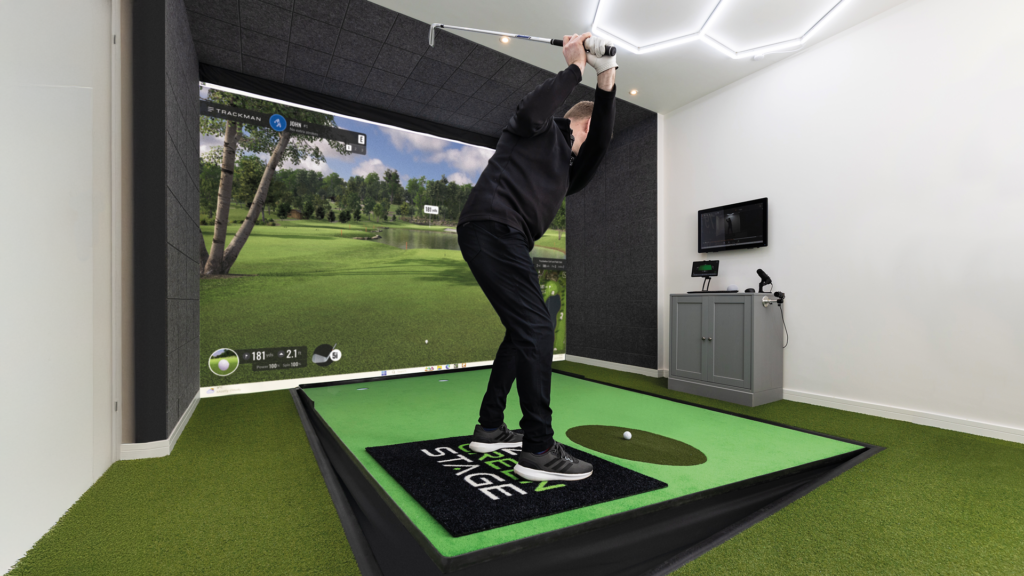
Why Uneven Lie Practice Matters
Golfers rarely strike shots from ideal lies. Ball position, stance, balance, and swing forces are continually shaped by the slope.
Practicing exclusively on flat ground risks developing movement solutions that fail under real playing conditions. Uneven lie platforms aim to close this gap by reintroducing environmental experience.
But not all uneven lie systems support learning equally.
The effectiveness of uneven lie practice depends not only on introducing slope, but on how accurately and consistently that slope behaves.
When gradients feel artificial, lack precision, or cannot be reliably repeated, players adapt to the platform rather than to the demands of the game.
High-quality uneven lie environments preserve the same balance challenges, force adjustments, and perceptual cues golfers rely on outdoors. Without this fidelity, practice risks reinforcing solutions that break down on the course.
The Questions Buyers Rarely Ask
Before investing, facilities should consider:
- How quickly can terrain be changed during a session?
- Can slopes be combined in subtle, functional ways?
- Is the system easily to use for all types of users?
- Does the system invite exploration?
- Can the experience be personalized to how you want to use it?
- How safe, reliable and accurate is the system?
These questions point to an important distinction. Some systems offer uneven lies as a fixed feature. Others are designed to make terrain a controllable and programmable variable that adapts to the session, the player, and the coach’s intent. Read our buyers guide for coaches and facilities for a deep diver.
Facilities that overlook this distinction often find that uneven lie capability exists in theory but is rarely used in practice.
Zen’s uneven lie stages are designed to address this directly. Terrain can be adjusted quickly and precisely, combined into subtle compound slopes, and personalized through presets and playlists—allowing coaches, players, and facilities to use the system in ways that match their specific objectives.
If changing terrain disrupts session flow, coaches and players will default to safer, flatter settings, meaning low engagement and poor ROI.
The Coaching Reality Check
Real coaching environments involve:
- Limited time
- Mixed ability groups
- Players with varying confidence and physical capacity
Uneven lie systems must support these realities, not assume ideal conditions. A system that works only in controlled demonstrations often struggles in daily use.
In these environments, ease of use is not a convenience, but a prerequisite for adoption. Systems that require excessive setup, cautious operation, or complex calibration tend to be underused, regardless of their theoretical capability.
Uneven lie platforms designed for real coaching environments prioritize safety, robustness, and intuitive control so coaches can focus on learning rather than logistics.
Integration and Ownership Risk
Uneven lie platforms often depend on:
- Control software
- External measurement systems
- Network and hardware stability
Facilities should clarify:
- Calibration responsibility
- Update dependencies
- Who owns issues when systems interact
The most resilient solutions are those designed as part of an ecosystem rather than as standalone devices. When terrain, control systems, and measurement tools are designed to work together, responsibility is clear and operational risk is reduced.
This approach gives facilities confidence that uneven lie practice will remain reliable as technology stacks evolve.
Making a Better Buying Decision
Uneven lie platforms should not simply add difficulty; they should help shape learning.
The best systems help players:
- Adapt movement solutions
- Improve decision-making
- Build confidence and competence
- Transfer skills to the course
Facilities that prioritize learning design alongside hardware make better long-term investments.
Zen’s uneven lie platforms were developed to support learning first, not just difficulty. By combining high-accuracy terrain control, rapid adjustability, and integration with measurement and feedback tools, Zen Stages help players adapt movement solutions and decision-making in ways that reliably transfer to the course.
This is why Zen systems are used not only by individual coaches, but by academies, national programs, and governing bodies seeking consistent, scalable outcomes.
