
Trackman × Zen Integration for Indoor Golf Centers: Key Insights
Overview
The Trackman x Zen integration brings together trusted ball-flight data and real, physical slope interaction to help indoor golf centres move beyond flat-bay repetition toward experience-led practice environments.
Rather than adding more screens, features, or metrics, the integration changes how a space feels and how sessions unfold. Real slopes introduce variation, consequence, and decision-making into every shot, while Trackman provides the trusted performance reference players already value.
The Trackman × Zen integration helps indoor golf centres:
- Create sessions that feel different each visit without increasing footprint or staffing
- Increase retention by designing experiences players remember and talk about
- Differentiate beyond simulator accuracy through physical realism and learning depth
- Support premium coaching, fitting, and training offerings that justify higher value
The result is an indoor golf environment where technology supports interaction, learning, and culture—helping centers build long-term engagement, not just short-term bookings.
This article is written for indoor golf operators, franchise groups, and facility owners seeking to design experiences that scale commercially while remaining meaningful to players and coaches.
Written by: Will Stubbs, Head of Education, Zen Golf
Last Updated: 18/02/2025
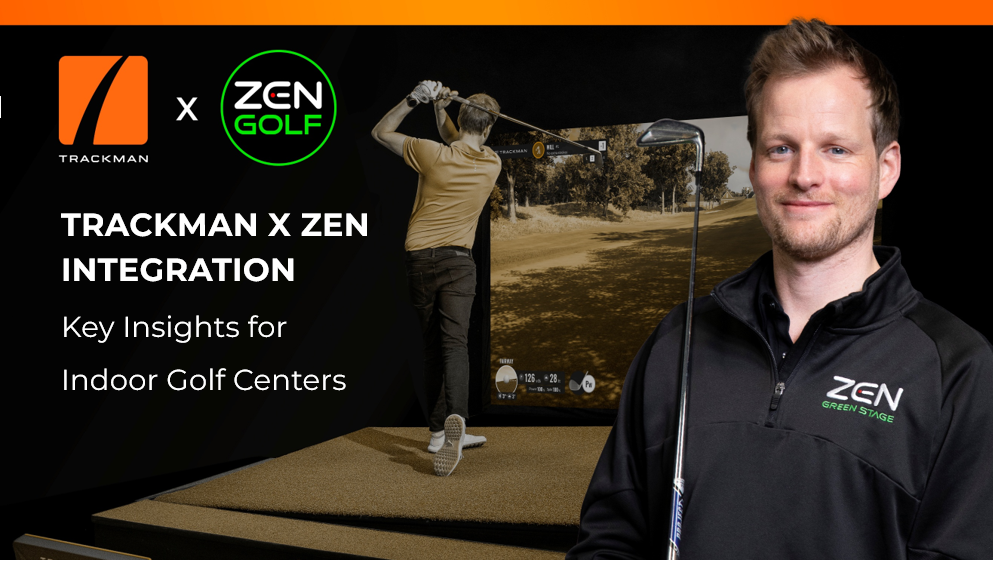
From Technology Stacks to Experiences People Return For
Many indoor golf centers are sitting with a familiar question:
Should growth come from adding more technology, more features, and more data?
It’s a reasonable instinct. New technology is easy to justify on paper. It promises improvement, clarity, and progress. It attracts attention, generates early excitement, and fills booking slots.
Yet many operators are noticing a pattern…
Why More Technology Doesn’t Automatically Drive Retention
Initial interest is strong.
Repeat visits are less certain.
Long-term engagement doesn’t always follow at the same pace.
Therefore, for operators—especially those running multi-site or franchise models—every decision also must work inside strict commercial constraints.
Per-bay budgets, total build costs, and long lead times between signing and opening all place pressure on centers to invest only in experiences that genuinely change how a space performs.
Technology that adds complexity without improving session quality, pricing power, or retention quickly becomes a liability.
This is where the Trackman × Zen integration reframes the conversation. Not as more technology per bay, but to design higher-value sessions without increasing footprint, complexity, or staffing overhead.
The integration acts as a shift in how experience, learning, and culture are designed into the space.
Why Flat Bays Limit Engagement and Differentiation
Most centers now offer highly accurate ball-flight data, immersive visuals, and sophisticated game modes.
Accuracy is no longer the differentiator it once was.
As simulator technology becomes standardized, value moves elsewhere. Centers begin competing on:
- Atmosphere
- Session design
- Coaching experience
- Whether a visit feels meaningful or merely repeatable
When bays remain flat and static, sessions often blur together. The technology performs, but the experience lacks texture.
The race becomes which simulator has the most courses, rather than which center has the best experience.
This is where engagement quietly leaks away.
A Lesson from Padel: Growth Without Culture
We’ve seen this pattern before…
When padel expanded rapidly across Sweden, participation surged. Courts appeared quickly, bookings were strong, and the sport gained momentum.
Though many venues struggled longer term.
People played, but fewer developed a sense of belonging. The sport worked. The culture did not always follow.
Indoor golf faces a similar crossroads.
Growth driven by access and technology alone can feel productive in the short term, while something quieter is left underdeveloped: experience that creates connection.
The Shift: From Features to Experience
Viewed through this lens, the Trackman × Zen integration represents more than a technical collaboration.
It signals a shift:
- From adding features, to designing experiences.
With Zen Swing Stages integrated with Trackman, variation enters the bay in a way players can feel and connect with.
The same simulator bay no longer presents the same challenge each visit.
Slopes, lies, and terrain subtly change the task. Those changes influence:
- Decisions
- Confidence
- Emotional response
- Perception of difficulty
Over time, this creates moments players remember and talk about. Sessions with character and stories rather than repetition. Each slope creates a new shot, and new experience. A new conversation between the player and the game.
How Slopes Change Member Behavior
Why Variety Builds Culture
One of the most consistent pieces of feedback operators are hearing from coaches is not that slopes make sessions harder, but make them more engaging.
When real slopes are introduced, coaches report that player behavior changes immediately. Balance strategies, decision-making, and swing organization become visible in ways flat bays simply cannot reveal.
This changes the quality of conversation inside the center. Sessions become less about correcting mechanics and more about understanding why certain solutions hold up—or fall apart—under different conditions.
When experiences change meaningfully, conversation follows.
Members begin to:
- Compare sessions
- Share stories
- Reflect on how they handled different situations
The environment becomes something to engage with together, rather than a backdrop for isolated play.
This is how culture forms inside facilities through:
- Shared experiences
- Stories
- Sessions that feel distinct, not interchangeable
Zen Golf Stages introduce this variety physically, giving Trackman data environmental context rather than numerical isolation.
Together, they support engagement that goes beyond “good numbers”.
Over time, these shared moments of discovery create something far more valuable. They create a culture where learning, conversation, and curiosity are part of the experience members associate with the venue.
How Coaching Evolves Inside the Center
With Zen Stages integrated alongside Trackman, coaching naturally evolves.
For centers, this creates coaching experiences that feel deeper, more personalized, and easier to differentiate, without increasing lesson time or complexity.
With Zen Stages, practice starts to resemble on-course situations more closely. Players respond differently to slopes, lies, and visual cues, and those responses reveal how they experience the game.
Coaches move from:
- Correcting movements, to facilitating environments
Patterns of comfort, hesitation, and decision-making surface naturally.
Why one slope feels manageable while another creates tension tells a richer story than ball data alone.
Trackman metrics sit alongside these human responses, not replacing them, but helping explain why performance changed.
What This Means for the Future of Indoor Golf Centers
The centers that will grow strongest over the next decade will be those that use technology to support interaction.
They will be centers that:
- Use technology to spark conversation
- Create practice that feels meaningful, realistic, and varied
- Encourage shared learning, not isolated optimization
- Build culture alongside capability
Culture forms through shared experiences and conversation. Learning deepens when practice feels meaningful.
Why Invest in Zen × Trackman?
Most simulator environments measure performance in isolation.
The Zen × Trackman integration connects trusted ball-flight data with a physical environment players can feel, adapt to, and learn from.
What this changes:
- From flat repetition to real problems: Zen Stages introduce slope, lie, and terrain variation that shape decisions, not just outcomes.
- From data after the shot to understanding in the moment: Trackman shows what happened. Zen explains why it happened.
- From novelty sessions to meaningful experiences: The same bay becomes a different challenge each visit—creating stories players remember and return for.
- From instruction to facilitation: Coaches design environments that reveal behavior, rather than correcting movement in isolation.
For many operators, the most effective way to adopt new experiences is not through immediate scale, but through proof.
Flagship installations allow centers to test ROI, refine session formats, and understand how slopes change member behavior before wider rollout. They become live showrooms, not just for customers, but for staff, coaches, and future locations.
The Trackman × Zen integration supports this approach. It allows centers to validate experience-led design first, then scale with confidence, rather than committing to technology before understanding its commercial impact.
Designing Premium Experiences Without Adding Bays
- From features to experience identity:
- Many centers now offer similar simulator stacks. Zen × Trackman creates an experience that cannot be replicated by software alone.
- From interchangeable bays to signature sessions:
- Physical slope variation gives your center a character members associate with your venue, not just a brand name.
- From data display to insight:
- While others show numbers, Zen × Trackman helps players understand themselves under real golf-like experience.
Differentiation in indoor golf is no longer about accuracy alone.
Centers using the Trackman × Zen integration can introduce session types and offerings that simply don’t exist in flat-bay environments:
- Premium slope-based coaching sessions
- Elite training bays with differentiated pricing
- Advanced club fitting experiences that mirror tour-level environments
- Bag mapping sessions for accurate on-course distances
- Skill challenges and leagues built around variable lies and decision-making
These offerings don’t rely on increased usage hours, but on better-designed sessions. One’s that justify higher perceived value and create reasons for members to return.
How the Trackman × Zen Integration Future-Proofs Indoor Golf Centers
As indoor golf matures, operators are increasingly looking for solutions that scale cleanly—financially and operationally.
- Against technology commoditization:
- As accuracy becomes standard, value shifts toward experience design. Zen × Trackman positions your center ahead of that curve.
- For evolving coaching models:
- The integration supports environment-led learning aligned with modern coaching education.
- For long-term retention:
- Experiences that vary, challenge, and invite conversation age far better than static formats.
- For scale and expansion:
- Systems built around experience adapt more easily as software, formats, and use cases evolve.
Flexible deployment models, leasing options, and predictable installation requirements are becoming just as important as performance capability. Experience-led environments only succeed if they are reliable, safe, and easy to integrate into existing builds.
Zen Stages are designed with this reality in mind. Standard power requirements, prefabricated subfloors, and structured installer training ensure that centers can innovate without introducing operational fragility.
Combined with Trackman’s trusted platform, this creates an experience that is both commercially viable and future aligned.
Building the Next Phase of Indoor Golf
Indoor golf centers don’t grow by adding more technology. They grow by designing experiences that justify premium pricing, build culture, and still work within real business constraints.
Together, Zen Golf and Trackman shift indoor golf from a technology stack to an experience-led learning environment.
One that supports:
- Culture
- Conversation
- Learning
- Long-term engagement
At Zen Golf, our work with Trackman is focused on exactly this challenge: helping indoor golf centers design environments people fall in love with.
Let’s start the conversation about what this could mean for your center.
Explore What Indoor Slopes Could Unlock
Book a Call to explore how the Trackman × Zen Golf integration can support premium session design, clearer interpretation of performance data, and experiences that genuinely drive retention.
For Indoor Golf Centers
Move beyond flat-bay instruction and novelty features. Deliver coaching and practice experiences members remember, return for, and talk about—where Trackman data makes sense because the environment mirrors real golf and every session carry its own character.
For Coaches
See how environment-led practice transforms Trackman data from technical confirmation into insight about behavior. Real slopes allow you to unlock more meaningful and personal lessons for your clients.
For Players
Experience practice that reflects how golf is played. Training on real slopes helps players understand how their swing responds to gravity, balance, and intention—so decisions on the course are guided by lived experience rather than technical rules learned on flat ground. Sessions feel different, memorable, and meaningful each visit.
For Colleges & Universities
Create learning environments that scale across squads. See how environment-led practice transforms Trackman data from technical confirmation into insight about behavior. Real slopes expose how players self-organize through the ground, revealing adaptability, robustness, hesitation, and commitment—allowing coaching to shift from fixing mechanics to facilitating better decisions.
Take a Deep Dive and learn how to apply slope-based constraints, task design, and Trackman metrics across your entire coaching program—turning technology into experience and practice into something people fall in love with.
